

Infectious Laryngtracheitis : Know the Symptoms and Prevention
ILT (Infectious Laryngotracheitis) can cause high economic losses because a high mortality rate quite quickly follows the spread. ILT is caused by ILTV (Infectious Laryngotracheitis Virus) also known as Gallid herpesvirus 1 (GaHV-1). Clinical symptoms in ILT appear 6-12 days post-infection, varying in severity. The severity is influenced by viral virulence, secondary infection, immunity status, and stress level in chickens. ILT can be classified based on the symptoms that appear, namely acute, subacute, and chronic.
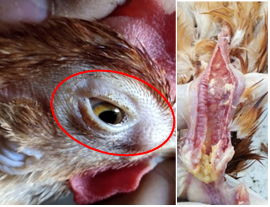 Figure 1. ILT Symptoms: swollen conjunctiva with foam, tracheitis (hemorrhage)
The spread of ILT occurs directly and indirectly. Direct spread from sick chickens that transmit to other chickens through upper respiratory tract secretions. Indirect transmission occurs when the virus contaminates the environment and cage equipment. Therefore, cages infected with ILT must be vaccinated to prevent repeat cases. While in cages that have never been infected, vaccination can be a consideration in prevention efforts. Besides that, it is necessary to improve the Biosecurity system.
To prevent the occurrence of ILT, in addition to the right vaccination program, it is necessary to improve Biosecurity in the cage area. To support the diagnosis of ILT, laboratory testing can be done to detect and identify it. Some of the methods used by our laboratory Agrilab to diagnose ILT, are PCR, histopathology, and ELISA.
by drh. Aulia Fetrirahayuningrum
You may also like

Symptoms and Prevention of CRD in Poultry
CRD (Chronic Respiratory Disease) is an infectious...

Agrinusa and Vaksindo Regularly Held Seminars with...
Agrinusa Jaya Santosa and Vaksindo Satwa Nusantara...